Three weeks ago, I bought a cardigan with “Women’s Relaxed Fit” stitched into the collar. This may not matter to you, but I assure you it mattered to me, so I triple checked before pulling my credit card out, flipped the garment inside out twice while standing in the aisle at a thrift store in Logan Square because damn did that thing fit comfortably. Like, more comfortably than anything I’d tried that afternoon in the mens section. Cable knit. Oatmeal color. Buttons that weren’t straining against my chest like they wanted to hop back up where they started.
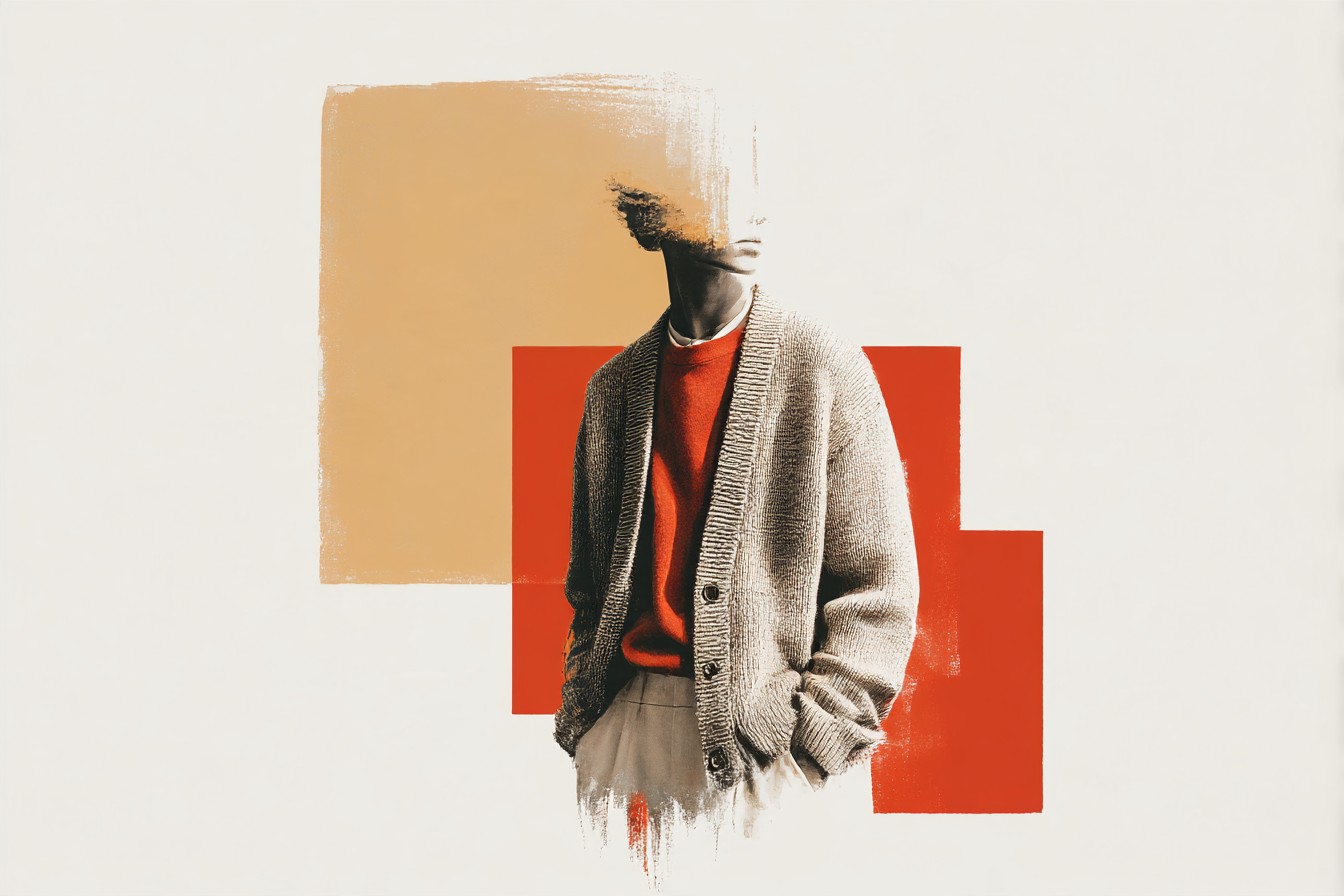
It was nine dollars. I wore it out of the store.
My friend Owen spotted it two days later and asked me, dead serious, if I’d “started shopping in the women’s section now.” Not accusatory. Just perplexed. Like how Matt Damon eating like a fish would perplex him. And forgive him, because we’ve all internalized this concept that women’s clothing and men’s clothing are not only worn by different people, but are fundamentally different products. Built of different fiber. Cut from different cloth. Designed in some bearishly structural way for the different proportions we carry. They’re not. A cardigan is yarn knit into a shape with buttons on the front. The only thing dictating what section it winds up in is that arbitrary shape.
And yet, shape — more often than we want to believe — has almost nothing to do with gender and everything to do with which department a buyer decided it belonged in eighteen months ago.
The sizing is the problem, not the sweater
Let me paint a picture of what actually goes down at a clothing company, as best I can from way too many hours staring at size charts trying to understand how they work, which is probably my own condition broken down. Someone sketches out a cardigan. It’s given a fit. A shoulder width. A body length. A taper on the sleeves. Then someone attaches a gender to that cardigan and that’s it, what would’ve been a unisex garment is now forced into whatever sizing standards that brand uses for mens medium vs womens medium. The numbers attached to the garment aren’t determined by its cut. They’re determined by whatever marketplace precedent that brand has established beforehand, which means a women’s large and a men’s small can be physically identical pieces of clothing wearing entirely different labels.
I mean I did the math on this because I couldn’t stop thinking about it. I grabbed the material measurements from five different cardigans at one big box retailer, three sold under “men’s,” two sold under “women’s.” Lay them side by side. The women’s large I was semi-heartbroken to find was marked as sold out had a flat chest width of forty four inches. The men’s medium next to it on the website was forty three and a half inches. Half an inch separates your “medium” from my “large.” Half an inch and you’ve crossed this mystical wall that people get way too worked up about.
Half an inch that also doesn’t account for the weeks you’ll spend trying to explain to your girlfriend why you can’t find anything that fits you but her stuff all does.
This is a language problem. That’s what it is. A fixed, industry wide convention of labels that feels impossible to escape because it is impossible to escape when you’re browsing a store onsite, but doesn’t actually affect the garment being sold. I want to be harsh about this because I see dudes pass up amazing pieces of clothing all the damn time because of a word on a label that wasn’t describing the jacket itself, it was describing a business model. Someone somewhere made “womenswear” the category these buttons fell under when typing up that google sheet and 18 months later suddenly that word holds enough power to dissuade a grown ass man from buying a nine dollar sweater that fits better than anywhere else in that store he’d paid full price.
That word doesn’t mean anything. Clothing doesn’t get to police itself based on what tag comes sewn into its collar.
What actually changes when you stop caring
Nothing, honey. Nothing about the garment changes. That’s what’s so aggravating. That’s what I wanted to scream at all the dudes I see browsing the “women’s” section like they think they’re going to get arrested if they touch anything. Your cardigan is still going to be made out of the same exact materials, cut to the same dimensions, use the same amount of yarn. The only thing that changes when you stop giving a shit is your shopping experience.
I wore that damn cardigan thirty times in October. Over a shirt to work once because someone complimented me on choosing “such a unique color.” Under a jacket while commuting home during a legitimately miserable snowstorm because it did what a sweater was supposed to do and kept me warm without making me feel like I was sweating through six pounds of cotton. Nobody cares where you shop for clothes. Seriously. Nobody asks you if your sweater’s from the male or female department because it doesn’t proclaim that anywhere on itself. Only that damn stitched in label does, and those things come out in the wash.
I think what we’re scared of, deep down where we don’t want to admit it out loud, is somebody thinking you’re wearing it wrong. But nobody cares. There is no sweater police. There’s your buddy at the thrift store register who scanned my sweater for nine dollars and didn’t blink twice. There’s Owen who questioned me about it once we cleared up the initial confusion, because he liked how it looked on me and wanted to get one for himself.
If anything scares you about stepping into that women’s section, let it be how cheap, thin those walls actually are. How easy it is to come out the other side with something that looks good on you.
With something, for the love of all that’s holy, actually fits.
I’m not going to lie to you and pretend this applies to every single guy. If something doesn’t fit your body, that’s something you should address like you would with any other improperly fitted garment. There’s returns for a reason. Drop it and try another size. But if the only reason you’re hesitating is because of an arbitrary label that said sweater came with describing a boardroom decision that doesn’t even impact the material you’re holding in your hands, get over it. Pull up your favorites. Swipe right. Throw that baby in your shopping cart.
Labels come out in the wash.

Marcus started the menswear section after getting fed up with coverage that called a two hundred and fifty pound hoodie an easy Tuesday buy. Based in London, he writes about pricing, returns policies and what brands actually deliver.